
/redlightgreenlight — by Amadon
“Gaza will be totally destroyed.” Israel’s finance minister, Bezalel Smotrich, made that promise on May 6, 2025, at a settlements conference in the occupied West Bank. It was the nineteenth month of the genocide.
The population of Gaza—more than 2 million people, displaced and starved through nine weeks of total blockade—would be “concentrated,” Smotrich said, in a narrow strip in Gaza’s far south, between the Egyptian border and the Morag Corridor. Israel had just carved that corridor across Gaza, severing Rafah from Khan Younis. The rest of Gaza would be emptied. Once concentrated there and “totally despairing,” Palestinians would leave “in great numbers to third countries.”
Three weeks later, on May 27, Israel launched the Gaza Humanitarian Foundation (GHF), a new aid system backed by the United States, which approved $30 million to fund it in June. It would run four aid distribution sites: three in or beside the zone Smotrich had named, and the fourth on the Netzarim Corridor, the line that cuts northern Gaza off from the rest of the territory. There would be no aid distribution site north of that line.
Israel built the GHF to empty Gaza. Every feature of it serves that end. The food sits in the south because Israel wants the population in the south. Three of the four compounds sit near the Egyptian border because Israel intends Palestinians to cross it.
First, Israel dismantled the system that had previously been feeding Gaza. On March 2, 2025, it sealed the crossings, even though a ceasefire was still in effect. For the next eleven weeks, nothing entered Gaza: no food, no medicine, no fuel, no aid of any kind.
The purpose was explicit. Defense Minister Israel Katz said blocking aid was “one of the main pressure levers” against Hamas. Nine weeks into the blockade, the United Nations reported that the food system was collapsing and children had “gone hungry.”
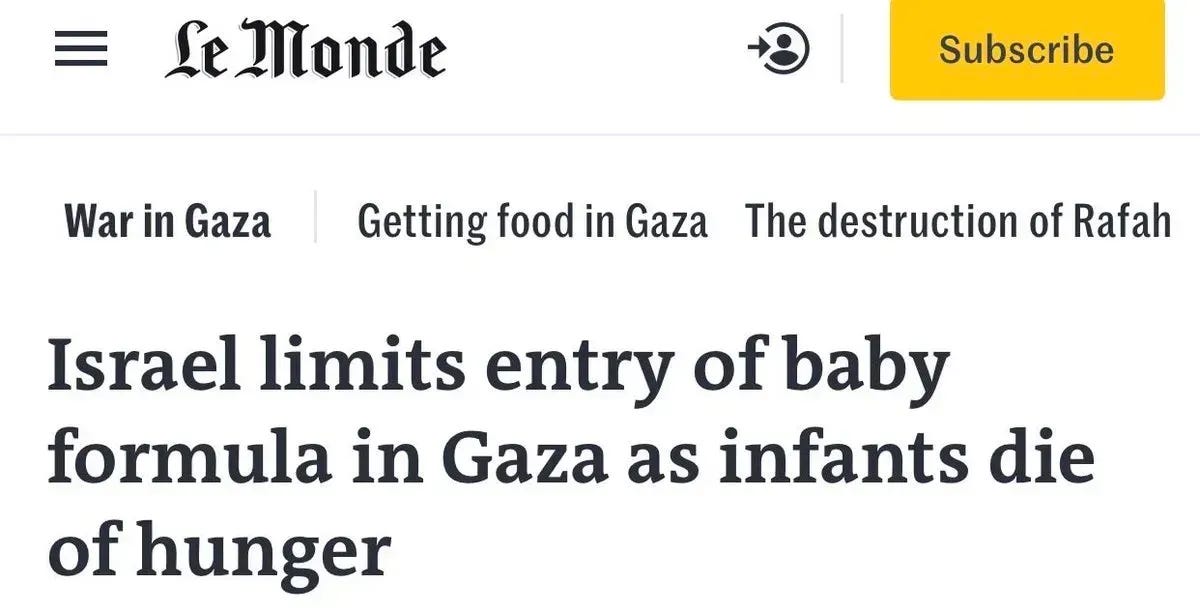
For decades, UNRWA, the UN agency for Palestinian refugees, had distributed food across Gaza through some 400 points. The network was organized around a simple humanitarian principle: Bring food to where people are, because the most vulnerable cannot travel for it. Israel outlawed the agency, killed more than 300 of its staff, and bombed its schools and shelters while displaced Palestinians were inside. The GHF then replaced UNRWA’s 400 distribution points with four. Under the new system, aid no longer reaches the people. The people must reach the aid—and many cannot.
The four sites are located as far as twenty kilometers from where much of the population shelters—roughly four hours on foot each way for a box of food. Their irregular opening times are announced on Facebook in the middle of the night. Lines form before dawn; supplies sometimes run out within minutes. The distance and timing form a filter that overwhelmingly favors the young and able-bodied. The people whom aid exists to protect—the elderly, the disabled, the wounded, mothers with children they cannot carry—are cut off by design.
Before the first site opened, the UN issued a statement warning that the plan would leave those least able to move without supplies. It would turn control over the means of survival into “a pressure tactic” within a military strategy. UNICEF said the plan would use aid as “bait” for those who could move, forcing an “impossible choice between displacement and death.”
Palestinians who reach the compounds are funneled through metal chutes and forced to scramble across open ground for a box of food. Israeli soldiers and the armed American contractors running the sites have repeatedly fired on the crowds. Israeli soldiers told the Israeli newspaper Haaretz that they had been ordered to open fire on unarmed crowds queuing for aid. “It’s a killing field,” one of them said.
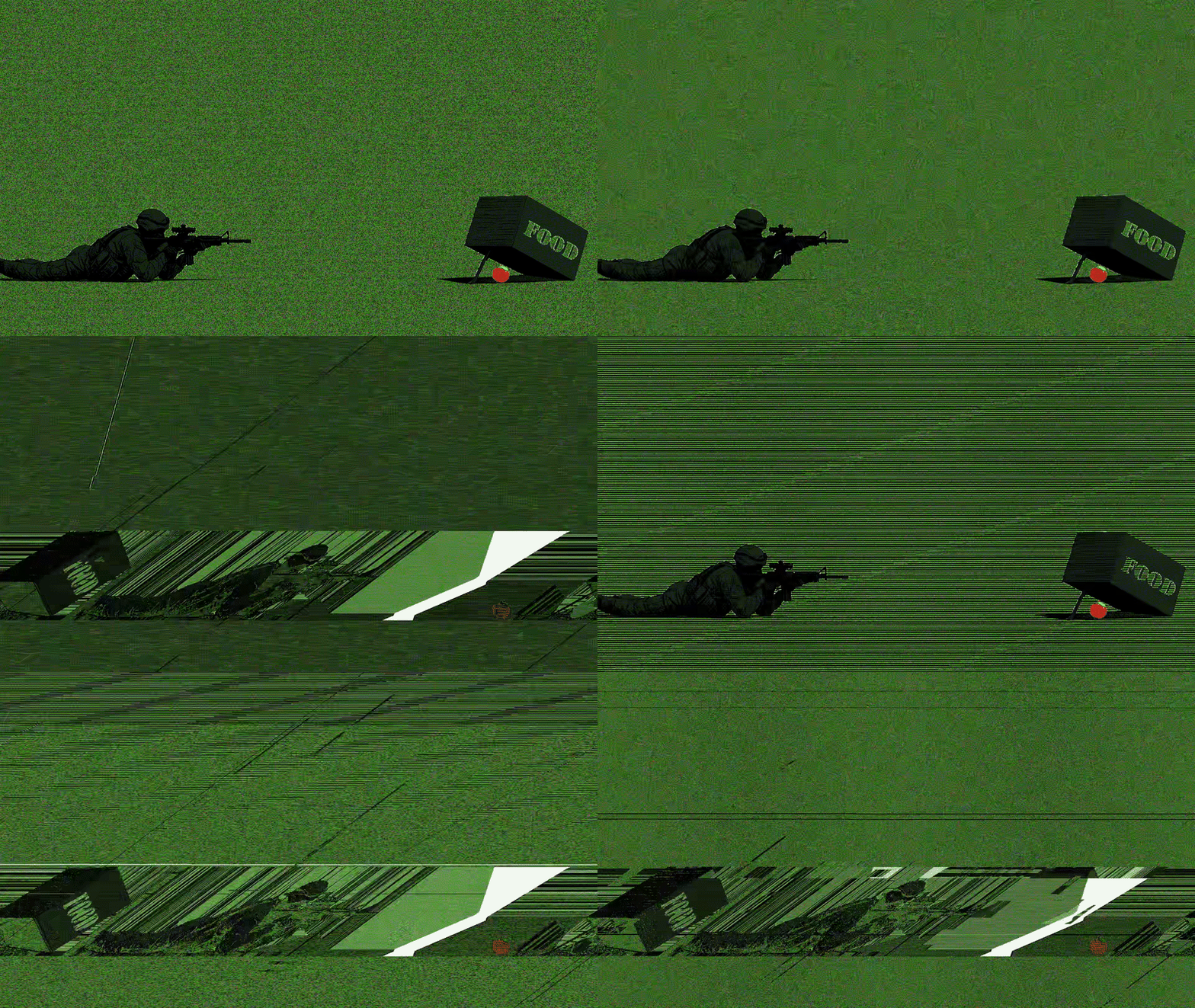
Soldiers call the mission “Operation Salted Fish,” after the Israeli version of the children’s game “Red light, green light,” in which players creep forward and must freeze on the caller’s word, or be sent back. Soldiers run the game with gunfire. They fire on Palestinians who advance before the announced openings. When the shooting stops, the crowds know they can approach.
Whistleblowers among the American contractors working the sites confirmed that fellow mercenaries fired live rounds at Palestinians waiting for food. One video captured an exchange between contractors after a burst of gunfire toward the crowd:
“I think you hit one.”
“Hell yeah, boy!”
By early July, after five weeks of operation, more than 500 Palestinians had been killed and more than 4,000 wounded at the GHF’s sites. The head of UNRWA called the system “a death trap.”
Israel wields starvation as a weapon of war. The GHF was never built to protect the vulnerable or keep a population alive. It was built to crush the will of an entire people by turning their most basic human need into a death sentence. By making the search for food lethal and forcing the starving to compete for scarce boxes, Israel also attacks the social bonds upon which collective survival depends.
Deliberate starvation, Alex de Waal writes in Mass Starvation, damages each person’s “web of obligations,” forcing the struggle for individual survival to displace reciprocity and collective responsibility. The “severing of community relations,” he warns, “may prove to be even more significant in the longer term” than the risk of death itself.
Israel’s purpose in Gaza is to starve the north until its people move south, to concentrate them against the border, and to drive them out through what Israeli officials call “voluntary emigration,” a euphemism for ethnic cleansing. Israel no longer conceals the next stage. Defense Minister Katz has ordered the army to plan a “humanitarian city” on the ruins of Rafah. Palestinians would be screened, moved into it, and never allowed north again.
The method is old. In the summer of 1942, the Nazi authorities liquidating the Warsaw Ghetto offered three kilograms of bread and one kilogram of marmalade to every starving Jew who reported “voluntarily” for deportation. Beyond Gaza, the international legal order built after 1945 rests on the understanding that even war has rules, and that starving civilians is a crime anywhere. That order ends wherever the world permits its rules to be abandoned. By luring the starving to aid sites, then slaughtering them, Israel and the United States send a message to the poor and the colonized everywhere: the protections were never for them, and they can be starved, herded, and driven out in daylight, without consequence.

The contrast between UNRWA’s hundreds of distribution points and the four sites described here is striking. The article makes an important point about how the design and location of aid can determine who can actually access it especially the elderly, injured, mothers, and other vulnerable people.
💔🥺