
American Zionism and the Silencing of Palestine
Part 1: Messianic Myths and Colonial Ambitions
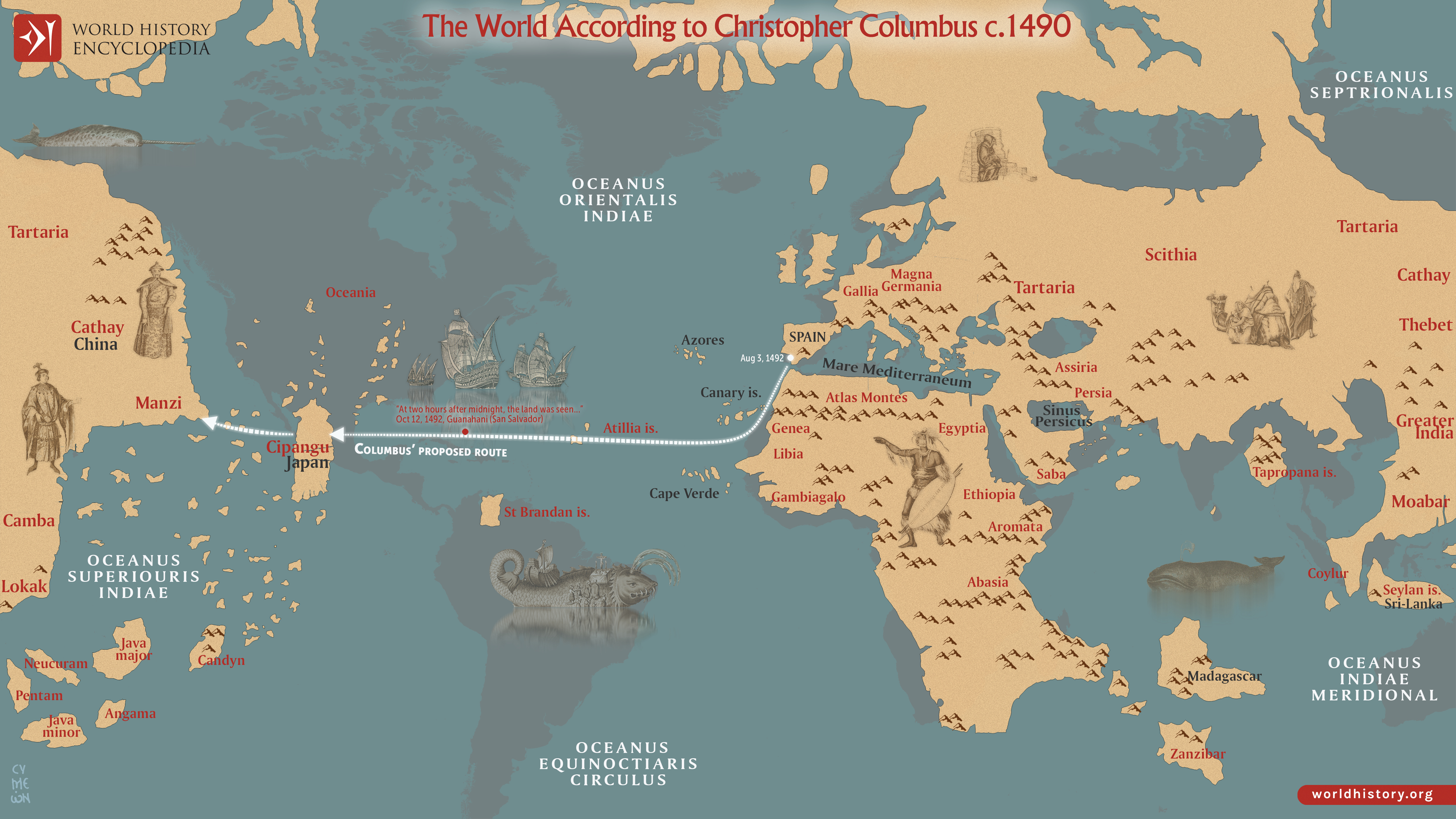
In the years after his first voyage in 1492, Christopher Columbus assembled a manuscript he called the Libro de las Profecías—the Book of Prophecies—a compilation of scriptural passages and apocalyptic commentary arguing that his westward sailing had been divinely appointed to hasten the end of days. The gold of the Indies, he wrote to Ferdinand and Isabella, the Catholic monarchs who had financed his expedition and completed the Christian reconquest of Spain that same year, would fund the final crusade to retake Jerusalem and deliver the Holy City into Christian hands before Christ’s return. The Americas entered European history as collateral for that war. The peoples who already lived there entered it as an obstacle scripture had already named. Five centuries later, the same warrant—scripture read as title deed, conquest read as covenant, indigenous life read as scriptural obstruction—organizes American support for the dispossession of the Palestinian people.
That warrant did not originate with Columbus. The Spanish crown sailed under papal bulls—Inter caetera, issued by Alexander VI in 1493—that divided the non-Christian world between Spain and Portugal and commanded the conversion or subjugation of its inhabitants. Scripture authorized conquest through ecclesiastical mediation, and the Church held the keys. What the Protestant Reformation did was break the lock. Martin Luther’s translation of the Bible into vernacular German in 1522 placed the text directly in the hands of ordinary believers and stripped away the Church’s interpretive monopoly. Conquest narratives, chosen people, promised land, command to destroy Amalek: the colonial world inherited them.
The text they held was specific. The Hebrew Bible’s conquest narrative, set down in Deuteronomy and Joshua, describes a people chosen by God, given a land already inhabited, and commanded to take it. The inhabitants are named—Canaanites, Hittites, Amorites, Perizzites, Hivites, Jebusites, Amalekites—and the command is explicit. “You shall devote them to complete destruction… you shall make no covenant with them and show no mercy to them.” The land is described as already promised; the peoples on it are described as already condemned. The text does not present this as conquest. It presents it as the execution of a prior verdict—a verdict scripture itself supplies. The settler arrives as instrument, carrying out a judgment already written. This is the structural move the Old Testament makes available, and it is the move every colonial doctrine that has cited it has taken: the land is promised, the people are Amalek, the killing is obedience.
The Puritans were the first to apply the unmediated text at settler scale. Landing in New England in the 1620s and 1630s, they read themselves as the new Israelites, the land as their promised inheritance, and the Wampanoag, Pequot, and Narragansett peoples who already lived there as Amalekites—the scriptural enemy marked for annihilation. The command in First Samuel was unsparing: “Now go and strike Amalek and devote to destruction all that they have. Do not spare them, but kill both man and woman, child and infant.” They carried it out. On the morning of May 26, 1637, English forces under Captain John Mason, with Mohegan and Narragansett allies, surrounded the Pequot fort at Mystic and set it on fire. English soldiers cut down those who tried to flee the flames at the palisade. Mason counted as many as seven hundred dead by the end of the morning, and wrote in his Brief History of the Pequot War that God “laughed his Enemies and the Enemies of his People to Scorn, making them as a fiery Oven… Thus did the Lord judge among the Heathen, filling the Place with dead Bodies.” The continent beyond New England would be read the same way.
That reading scaled. In 1845 the journalist John O’Sullivan named the doctrine that had been operating since Plymouth. Writing in the Democratic Review, he declared it the “manifest destiny” of the United States “to overspread the continent allotted by Providence for the free development of our yearly multiplying millions.” Providence had allotted the land. The people already on it were in scriptural trespass.
The execution followed. Andrew Jackson signed the Indian Removal Act in 1830 and marched the Cherokee, Muscogee, Seminole, Chickasaw, and Choctaw nations off their lands at gunpoint; four thousand Cherokee died on the march west. The continent was cleared the same way, decade after decade, village by village, from Sand Creek in 1864 to Wounded Knee in 1890. The peoples the Puritans had read as Amalek were nearly gone from the land they had read as promised. At contact, the indigenous population of the continent is estimated at between five and ten million; by 1900, fewer than three hundred thousand remained.
Christian Zionism is the doctrine’s current form. Its textual spine is the Scofield Reference Bible, published by Oxford University Press in 1909, which embedded into the annotations of the King James Bible a reading of scripture that made the Jewish return to Palestine the precondition for Christ’s return. Sales exceeded two million copies by the end of the Second World War; for most of the twentieth century it was the functional study Bible of American evangelicalism, teaching generations of readers that supporting a Jewish state in Palestine was an instruction of scripture. That teaching is now organized political force. John Hagee founded Christians United for Israel in 2006; the organization claims more than ten million members and describes itself as the largest pro-Israel lobby in the United States—larger than AIPAC. Hagee preaches the doctrine plainly: the land belongs to the Jewish people “today, tomorrow, and forever.” The covenant the Puritans read over New England is now being read over Palestine, by an organization funded through a country that underwrites the reading with weapons.
The alliance between Jewish and Christian Zionism rests on a paradox neither side names. Christian Zionists believe that the Jewish presence in Palestine is the precondition for a Second Coming at which those same Jews will be given a final choice: conversion to Christ or damnation. Jewish Zionists accept the money, the lobbying, and the diplomatic cover while knowing what the benefactors believe. The two movements diverge in eschatology and converge in operation: a Jewish state in Palestine, expanded, defended, and funded, with the Palestinians who live there cleared from the land.
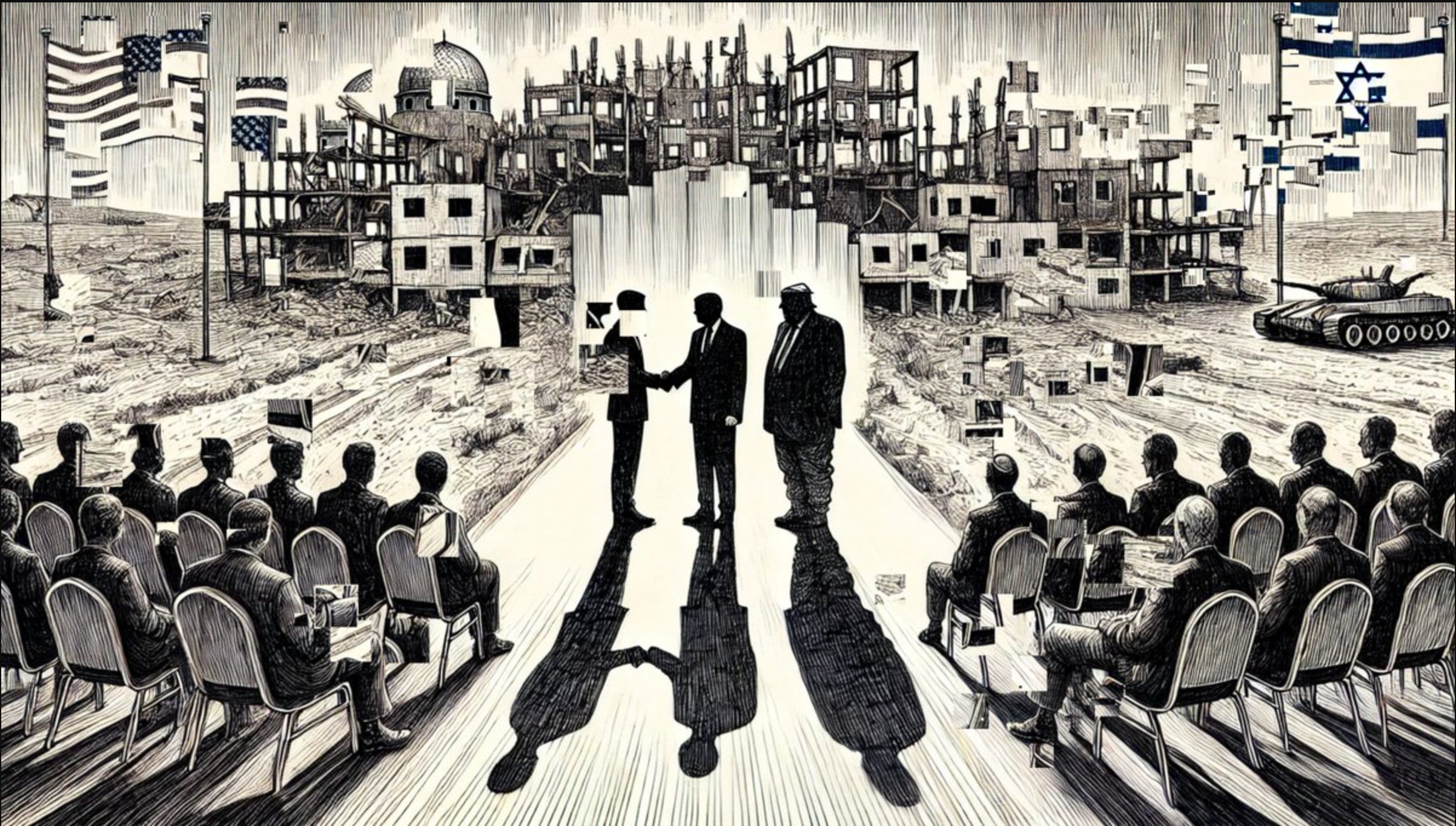
The alliance has claimed the office of the American state. Biden met Israel’s war cabinet in October 2023, days into the bombing of Gaza, and declared himself a Zionist. Blinken, in Tel Aviv, told Netanyahu, “I come before you not only as the United States Secretary of State, but also as a Jew.” Trump moved the U.S. embassy to Jerusalem and recognized the city as Israel’s capital—a theological act performed by the American presidency. No political commitment in American life is more nakedly theological than support for Israel, and none is more immune to law, evidence, or human cost.
The alliance is most visible on the floor of the legislature. While Israeli forces conducted the genocide in Gaza, Netanyahu addressed a joint session of the United States Congress. The chamber rose in standing ovation dozens of times. Democrats and Republicans rose together; Christian Zionists and Jewish Zionists rose together. The ovation was the alliance performing its own coherence. The chamber that applauded is the chamber that funds the genocide.
The doctrine has a problem it cannot solve. Palestinian Christians have inhabited this land since Christianity’s origins. Our communities are continuous; our churches predate the Crusades by centuries, and every colonial project since has tried to organize the land around our absence. Our existence refutes the claim that Palestine was empty, waiting, divinely reserved for another people’s return—and for Christian Zionism, that refutation is intolerable.
That intolerance has met its answer. In August 2006, four Palestinian patriarchs and bishops—Latin, Syriac Orthodox, Anglican, and Lutheran—issued the Jerusalem Declaration, naming Christian Zionism a “false teaching that corrupts the biblical message of love, justice and reconciliation.” Archbishop Atallah Hanna of the Greek Orthodox Patriarchate of Jerusalem was more direct: “Those who call themselves ‘Christian Zionists’ are not Christians at all. Their ideology and rhetoric have no connection to Christian values. A true Christian stands with the oppressed, not the oppressor.” Hanna also refused the sectarian division it imposes: “We, Christians and Muslims of the Levant, will remain one united Ummah, with Al-Quds as our compass and Palestine as our cause.”
The Declaration is one expression of a presence that predates every claim made on the land. Palestinian Christians predate the Zionist claim, the Crusader claim, the Roman claim. We are descended from the Jewish and Canaanite peoples the Bible names—including those the conquest narrative marked for destruction. Our ancestors accepted Christ and never left; the oldest Christian communities in the world are Palestinian, and we remain on the land the doctrine claims for its own. That is the fact Christian Zionism cannot absorb, cannot afford to acknowledge, and has not been able to erase.
Brilliant as always! Can't wait for the remaining parts.
🕊🤍🇵🇸